Contact Us
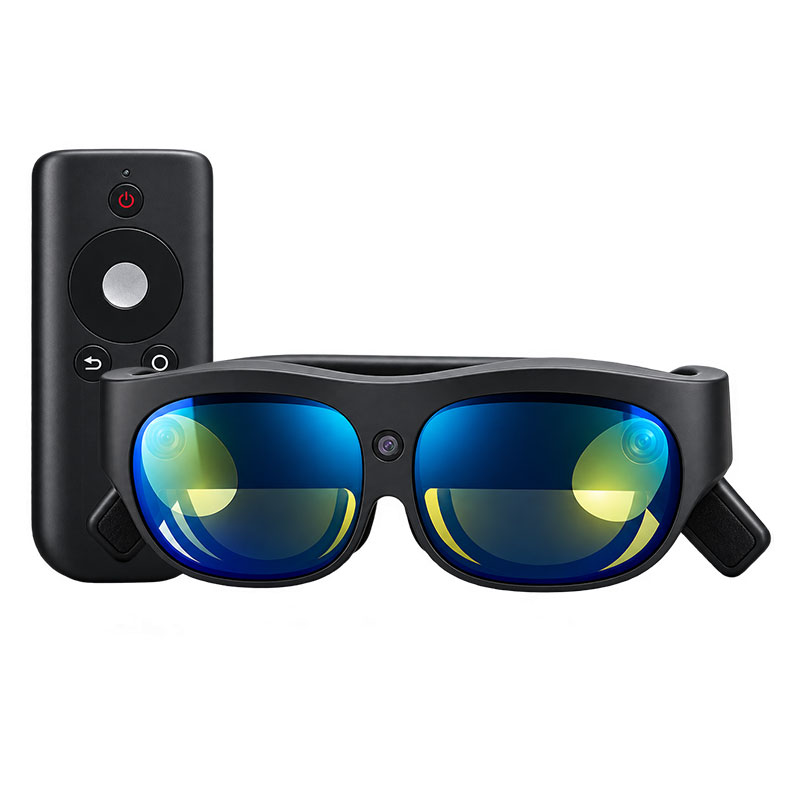
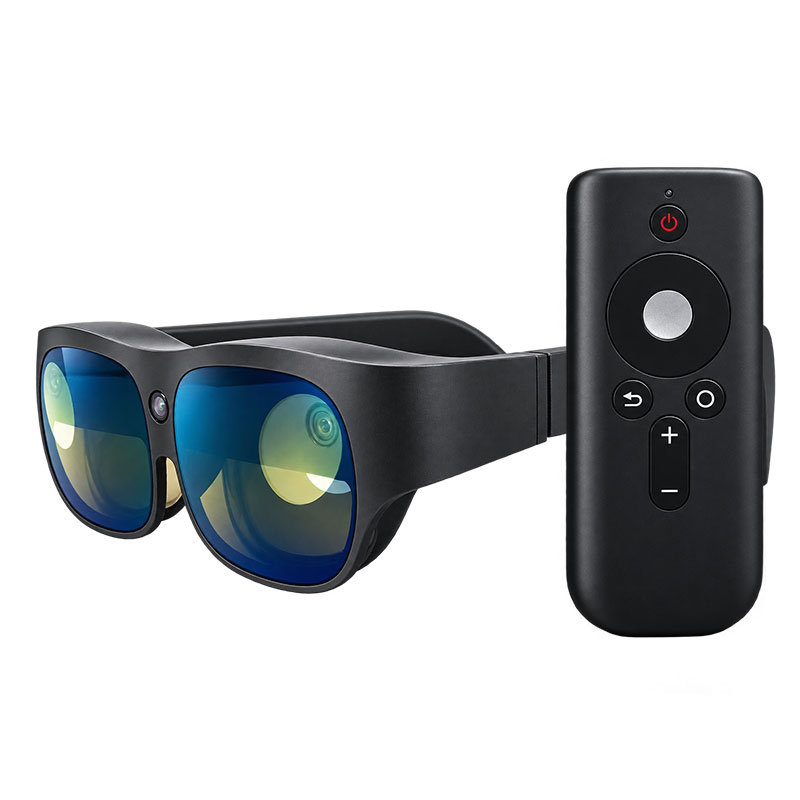

The 6DoF AR glasses uses a split architecture with glasses and an external computing unit. The glasses integrate dual fisheye cameras, an RGB camera, an IMU for 6DoF spatial tracking, and a Micro OLED display. The computing unit is powered by the Qualcomm Snapdragon XR2 platform and a 5,000mAh battery, and it handles core processing, storage, power supply, and active cooling. This shifts the main heat sources and much of the weight away from the glasses. The glasses weigh approximately 120 g, while the computing unit weighs around 220 g. The unit can be carried in a pocket or waist pouch, or attached to work gear, allowing the glasses to focus on tracking accuracy and wearing comfort.
By separating the main computing and power components from the glasses, this architecture offers greater flexibility in how the device is carried, mounted, and ergonomically configured for different working environments. The computing unit connects to the glasses through a full-featured USB Type-C interface, supporting connections to capture devices, external displays, work equipment power supplies, and enterprise intranet file systems while reducing the need to adapt additional peripherals during on-site deployment. The display combines Micro OLED technology with Birdbath optics, delivering a binocular resolution of 3840 × 1200, a refresh rate of up to 90 Hz, and an approximately 47° field of view. Brightness and interpupillary distance are adjustable, providing a visual foundation for 3D model viewing, spatial information display, and interactive training.
Spatial perception combines dual fisheye cameras and an IMU with SLAM to provide 6DoF positioning and fast relocalization, helping virtual content remain aligned with physical equipment, workstations, and training models. The system supports hand tracking and basic gestures such as tapping, grabbing, and scaling. Combined with a 3DoF ray controller featuring a directional pad, confirm button, back button, volume buttons, and cursor reset button, it provides multiple interaction methods through spatial pointing, natural gestures, and physical controls.
For brand owners and procurement teams, this product is not a fixed-configuration finished device, but an engineered 6DoF hardware platform with standardized computing and spatial tracking capabilities that can be adapted to specific display and interaction requirements. Drawing on its R&D and component selection experience with Birdbath and waveguide optical technologies, the QQS Group team can evaluate suitable configurations based on project objectives, optical performance, overall product structure, and cost requirements, reducing the need to build a spatial computing hardware platform from scratch.
Dual fisheye cameras work with an IMU to provide six-degrees-of-freedom (6DoF) spatial positioning and SLAM-based tracking, with support for fast relocalization. The stated positioning accuracy is at the centimeter level, with relocalization taking less than one second. This helps virtual content remain geometrically aligned with the real environment as users walk, turn, or tilt their heads. The capability is suited to professional tasks where accurate spatial anchoring matters, including spatial annotations, route guidance, and 3D model overlays.
The current model uses Micro OLED microdisplays combined with a Birdbath optical design, with adjustable brightness and interpupillary distance. This provides a display foundation for 3D model viewing, virtual interface presentation, and spatial learning. For different applications, the display specifications, optical approach, and overall product structure can be further evaluated for compatibility during the customization stage.
The system supports gesture recognition across a diagonal field of view of up to 150° and can track 26 joints on each hand. Recognized basic gestures include index-finger tapping, grabbing with the thumb and index finger, and scaling. The stated gesture recognition accuracy is approximately 90%, although actual performance depends on the operating environment and software implementation. The 3DoF ray controller provides physical controls for directional input, confirmation, and cursor reset. Together, these interaction methods reduce reliance on traditional keyboards and mice and can be integrated into industrial standard operating procedures (SOPs) or medical training and assessment workflows.
The computing unit independently houses the XR2 processor, 8 GB of RAM, and 128 GB of storage, physically separating the heat and weight associated with high-performance computing from the glasses. Active fan cooling with temperature control supports operation in ambient temperatures from 0°C to 35°C, helping maintain stable computing performance during extended remote collaboration or inspection tasks. The computing unit runs Android 10, providing a system foundation for industry application compatibility and enterprise software integration. Specific APK compatibility, mobile device management (MDM) integration, and software integration scope can be evaluated according to project requirements.
A full-featured USB Type-C connection carries power, data, and video between the glasses and the computing unit. DisplayPort 1.4 supports video output at up to 4K at 60 Hz, making it suitable for connecting external capture cards and monitors or recording screen activity for debugging. USB 3.1 and Power Delivery 3.0 (PD 3.0) support connections to standard power banks and work equipment power systems. Support for NFS 4.2 and SMB 3.1 local network protocols allows the device to access enterprise file servers and collaboration platforms directly, reducing the need for custom middleware.
The glasses are equipped with a 1080p RGB camera, dual microphones, and stereo speakers, providing hardware support for image capture, voice input, and audio feedback. These capabilities can be integrated with remote collaboration software, on-site work systems, or training platforms through application development.
The current model uses Birdbath optics. Depending on the application and product positioning, QQS can evaluate Birdbath or waveguide display technologies during custom development, taking into account optical see-through performance, field of view, overall product structure, and bill of materials (BOM) targets. The computing unit's interface configuration, battery layout, and mounting options can also be adjusted to meet on-site deployment requirements, providing a flexible development foundation for professional applications such as mobile work, industrial inspections, spatial interaction, and medical education.
Mobile Work and Spatial Information Display. View 3D models, virtual interfaces, and business information while keeping virtual content anchored to the physical environment during movement. The platform supports the development of AR applications tailored to specific workflows.
Industrial Inspections and Remote Collaboration. With compatible software, the system can support equipment information visualization, operational guidance, on-site image sharing, and remote technical assistance. The split architecture allows the computing unit to be carried with work gear while keeping the glasses lightweight, accommodating working positions such as climbing and bending.
Spatial Interaction, Gaming, and Digital Content. Combine 6DoF positioning, gesture recognition, and the ray controller to create spatial interactions, manipulate 3D content, and deliver immersive experiences. Potential applications include exhibition spaces, cultural and tourism venues, and interactive entertainment environments.
Medical, Educational, and Professional Training. Provide a hardware foundation for anatomy education, procedural demonstrations, and skills training through Micro OLED displays and 6DoF spatial interaction. Medical-related applications must be developed in accordance with the specific software requirements, validation criteria, and regulations of the target market.
QQS Group has R&D and manufacturing capabilities for smart glasses and XR devices, offering end-to-end ODM/OEM support for professional AR projects, from product definition through full-product mass production.
Optical and Display Selection. Evaluate optical approaches such as Birdbath and waveguide technologies according to the project application and product objectives. Design and component selection take into account field of view, brightness, optical see-through performance, overall product structure, and cost targets. The final optical configuration and performance specifications are subject to project evaluation and validation.
Custom Computing Unit and Product Structure. Customization covers the computing unit enclosure, battery layout, cooling airflow, interface configuration, and wearing or mounting methods. These adjustments help adapt the computing unit to on-site deployment options such as workwear pockets, belts, and mobile equipment.
6DoF and Interaction System Integration. Adjust spatial positioning parameters and validate virtual-to-real alignment according to the target application, while adapting gesture interaction logic and ray controller button assignments. For enterprise projects, Android application compatibility, MDM device management integration, and local network protocol connectivity can also be evaluated. The actual implementation scope depends on system permissions, interface availability, and project validation results.
Manufacturing and Certification Support. Capabilities cover precision tooling, PCBA manufacturing, full-product assembly, and reliability validation. Support is available for major market access certifications and compliance requirements, including CE, FCC, and RoHS. Backed by QQS's supply chain management system, the team can coordinate key stages from new product introduction (NPI) through mass production and delivery.
Together with QQS's existing lightweight AI audio glasses, AR viewing glasses, and AR sports glasses, this product expands the company's smart glasses portfolio across three areas: lightweight interaction, personal display, and spatial computing. For brands and enterprise customers seeking a 6DoF AR glasses ODM/OEM partner, or looking to bring spatial anchoring and a split computing architecture into industrial collaboration, medical training, or spatial interaction applications, this platform offers an engineering-ready path without requiring them to build the underlying spatial computing hardware from scratch.
The positioning accuracy, gesture recognition accuracy, relocalization time, and other performance figures stated in this article are nominal values under specific test conditions. Actual performance depends on the operating environment, algorithm configuration, software implementation, and project validation results.
If you are interested in our products and services , and want to know more details, please leave a message here, we will reply you as soon as we can.